Let’s Talk Newspapers, Rural Small Town Ones
Hometown newspapers are small businesses, just like the hardware store, the café, and the auto repair shop. Erin in El Reno pointed out that I mentioned newspapers four times in my book, which tells you how important I think they are.
They are not just “media.” They are employers, sponsors, storytellers, and neighbors.
Press Releases Still Matter
On page 54 of my book, I say: “Write a press release and send it to every paper in the state.” Newspapers have value, and they still do that one thing better than almost anyone else: they get local information in front of local people.
Send your press release everywhere you can—your hometown paper, nearby towns, regional papers, even some state-level outlets. A good advertising department will not only run your announcement, but they’ll also see the potential in it. They’ll mock up ads, stop by or call, and help turn that little piece of news into a bigger presence for your business.
Local news is vital, and so is local advertising. Those two go together.
Lost Income, Lost Local Impact
On page 100, I list “Advertising revenue to local media” under sources of lost income when a building sits empty. That’s not just a line item; that’s a warning.
When businesses stop advertising locally and send those dollars off to big platforms instead, the community loses twice. The paper loses revenue, and the town loses a reinvestor. Those ad dollars pay local staff, buy local services, and often go right back into supporting ball teams, events, and causes.
When local media loses revenue, your town feels it. You may not see it right away, but you feel it in fewer stories, fewer events covered, and fewer connections being made.
“Old Way” Does Not Mean “Done”
On page 117, I wrote that marketing in newspapers was the old way of doing things.
Back then, “marketing was limited to print.” That was the old way. Today, it thrills me to see papers using social media, building websites, and sending email newsletters. Going digital is not abandoning print; it’s adding another way to reach people whose habits have changed.
Readers online are looking for quick bursts of news and useful information. Put ads in front of them there, too. My old local newspaper even ran direct marketing campaigns—designing postcards, inserting them in the paper, and/or mailing them out. That’s a “new way” built on an “old” platform.
The Local Paper That Made Everyone Smile
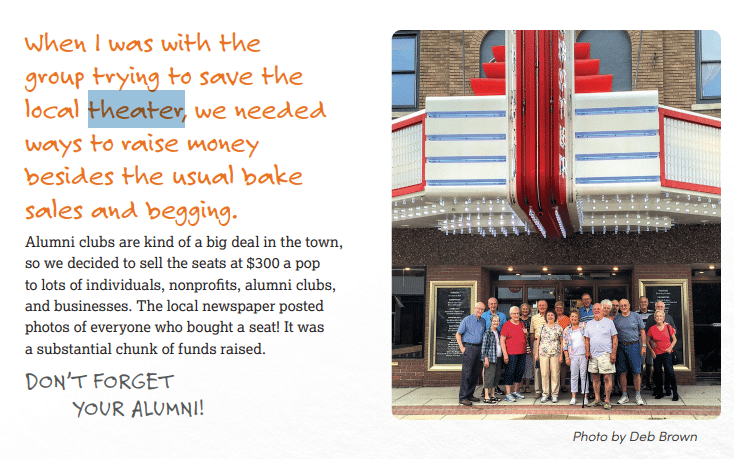
On page 134, I tell one of my favorite stories. In a town of about 8,000 people, the local paper posted photos of everyone who bought a seat in a new business. People were excited to see their picture in the paper. They cut it out, they saved it, they showed it off.
That story shows the best of what a hometown newspaper can do. It supports local businesses, celebrates residents, and turns ordinary transactions into moments of pride. It says: “You matter here.”
That is the kind of thing no algorithm is going to do for your town.
story from Debs book
What Newspapers Are Facing Now
I know it is hard for small newspapers these days. Many are running with just an editor, an ad person, and, if they’re lucky, a design person. Some have been bought out by large conglomerates that don’t always share the town’s priorities. Others have closed their doors entirely.
Staff is stretched, budgets are tight, and expectations keep growing. And yet, many of these papers still show up at council meetings, Friday night games, and ribbon cuttings. They still publish the obituaries, the birthdays, the wedding announcements, and the school honor rolls.
I get how hard it is. And that’s exactly why I keep talking about how much they matter.
Newspapers: Tell Your Own Story
You often hear me say, “Tell your story.” That goes for the newspaper, too.
Don’t assume people know what you do. Show us how you’re involved in the community:
- Share that you cover everything from birthdays to wrestling.
- Introduce your staff—let us know the faces and names behind the bylines and camera lenses.
- When you win state newspaper association awards, rerun those stories and tell us what’s happened since.
- Use your website and social media to share what you can’t fit in print.
On our SaveYour.Town website, we have a “work with us” page. Newspapers can create something similar—a simple, clear place where local businesses can see who you reach, how you can help them, and how to get started.
Here’s what could go on that page or a simple one-sheet:
- Who reads your paper: top age ranges, key ZIP codes, and the most popular sections.
- When they read it: weekday vs. weekend audience.
- Which sections work best for which audiences: weekend features for families, sports for local fans, business page for professionals.
- Seasonal spikes: back-to-school, holidays, elections, big local events—so advertisers can time their campaigns.
This turns your newspaper from “a place to buy an ad” into “a partner who understands the audience.”
Go Deeper with Small Businesses
Small businesses and small newspapers need each other. Let’s move beyond “Do you want to buy an ad?” and toward “How can we work together over time?”
Here are some practical ways newspapers can go deeper with local businesses:
Basic ad-planning sessions
Sit down with businesses and help them:
- Define their ideal customer using your readership data.
- Choose the right sections and days.
- Set a realistic frequency so the message has time to work.
“Track-with-us” packages
Don’t just run ads—help track what happens. Include:
- A clear call-to-action (bring in this coupon, scan this QR code, visit this URL).
- A unique coupon, QR code, or URL for that campaign.
- A simple tracking sheet or shared dashboard.
- A short results review at the end: what worked, what didn’t, and what to try next.
Reader surveys for advertisers
Run occasional sponsored questions like:
- “Where do you shop for gifts?”
- “Which restaurants do you visit most often?”
This engages readers and gives advertisers insight they cannot get from a generic online dashboard.
These steps move you from “selling space” to “solving problems” for local businesses.
Collaboration, Not Just Ads
Your paper already covers business, church events, sports, family reunions, and all the good things happening in town. That is the heartbeat of a community.
This is the time for collaboration, not just an advertising rate card. How can you:
- Co-create campaigns with local businesses?
- Tie coverage, advertising, and online content together?
- Build long-term relationships instead of one-off ads?
When newspapers and small businesses work together, the whole town benefits. The stories are stronger, the businesses are stronger, and the sense of local pride is stronger.
Shop local is even more important these days. And that includes your local newspaper.