The Burney Book Club
The poster said:
The Chamber has partnered with Shasta EDC, Intermountain community members, and business owners to initiate positive action in our community. If you are invested in the Intermountain community and want to be part of the solution, please join us.
You don’t need a lot of money. You don’t need to be an incorporated town. You don’t even need permission.
You just needed an idea to join the Book Club of Burney. And the willingness to be part of the solution.
Rebecca Baer Tries a New Way for Economic Development
Rebecca saw Becky and me at one of the rural sessions at an IEDC Conference. In her job as economic development director, they normally look for larger industries to bring to town. And frankly, that no longer works in small towns and rural communities. Listening to us share stories of what other small towns are doing sparked her interest, and she was looking for a way to help her towns.
Rebecca found my book
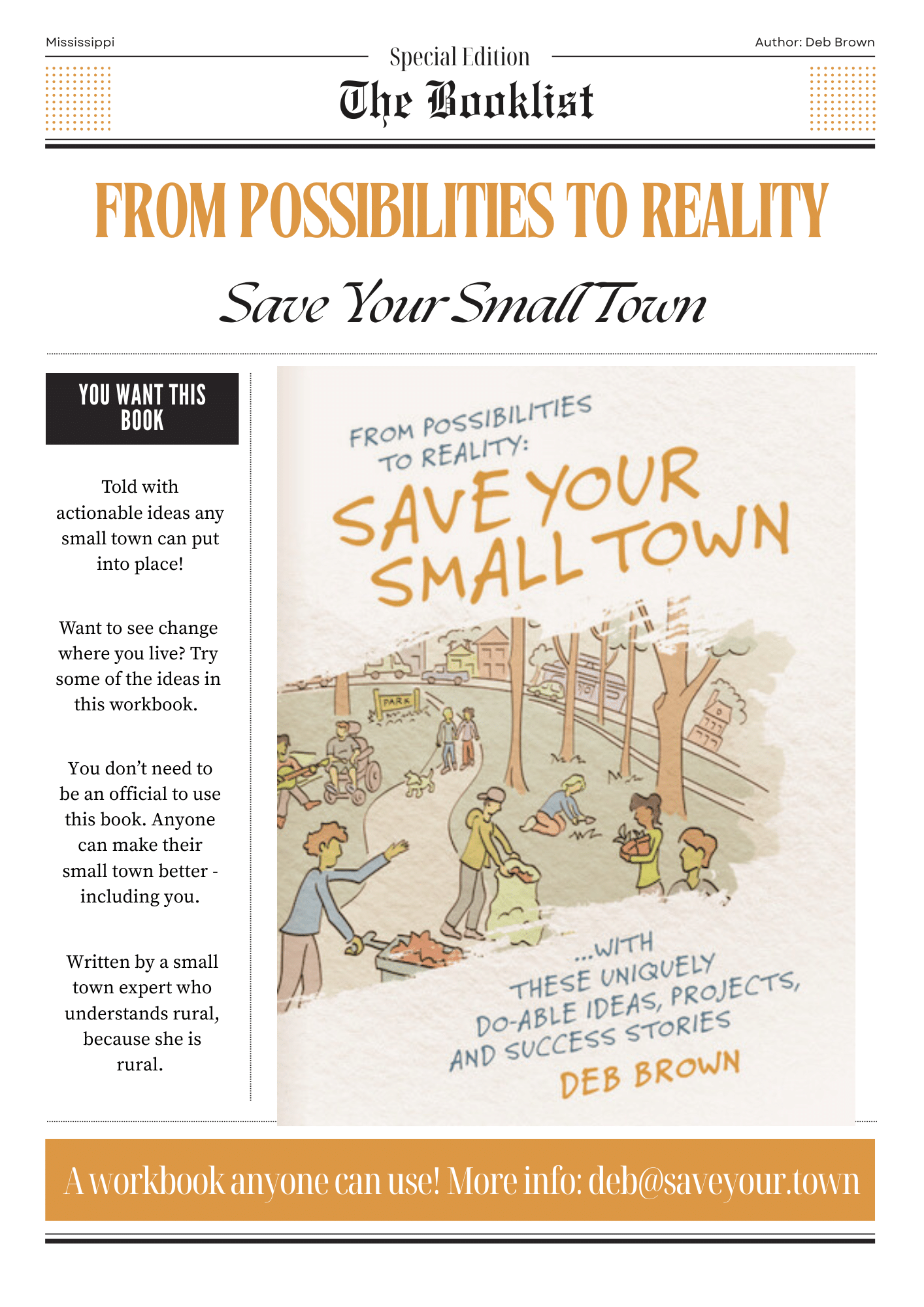
I wrote a book, From Possibilities to Reality: Save Your Small Town, and shared the book club idea in one of our newsletters (they are free: www.saveyour.town/signup).
She took the book club idea proposal to the Burney Chamber of Commerce. They said yes, and the small town of Burney, CA, formed a book club, and Rebecca is the facilitator. Rebecca took advantage of the book club promotion, 5 books for the cost of 4, and scheduled the first meeting.
Why are you here?
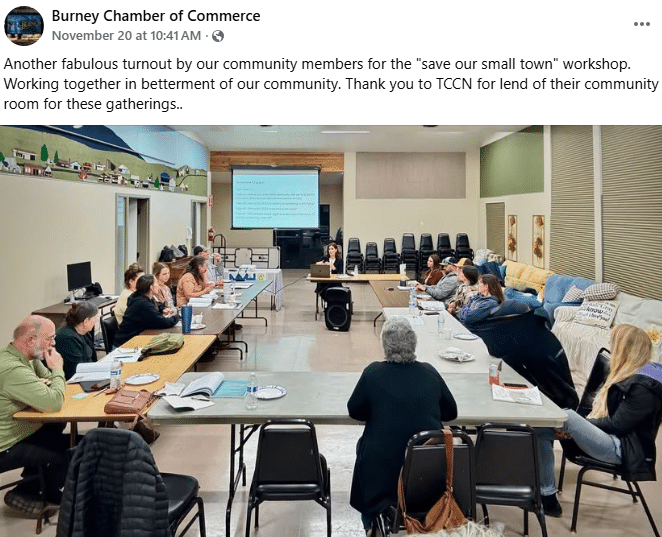
People showed up at the first meeting! Turns out, Burney folks want to save their small town, and they want to do it together. The 23-minute Idea Friendly Method video was shared with the group. In this video, there are places where you pause the video and people watching write down:
- Their Big Idea
- Who would be interested in helping
- What other connections are needed
- What small steps can you take to get started
As facilitator, Rebecca showed the video and kept folks on task and excited about their ideas.
Her most important job that night was to keep people focused on taking small, doable steps instead of getting stuck in big talk.
People attending had action items to pursue, and they set dates to complete them.
Is this turning into a ‘meeting’?
Three weeks later, the second gathering of the Burney Book Club happened. Folks came and shared their stories of the actions they took and the responses they received. But there were new people there, too. Word had gotten out that this was a club you wanted to join.
The first dilemma was that these new folks hadn’t watched the video, hadn’t had a conversation about what the method was, and really didn’t understand the Idea Friendly Method.
Then there was a bigger dilemma. In that new group of people were the pontificators. You know them. You’ve got these folks in your town, too. You can picture them right now. These are the people who are ‘big picture’ people, the ‘what we need is’ people, the ‘we tried that before, and it didn’t work’ people who talk and talk and hold meetings, and nothing ever gets done.
Rebecca was gracious and brought folks back to the small action steps and what steps they can take next.
Adapting to new book club members
At the third gathering of the Burney Book Club, folks came back, still excited about their big ideas and still taking action! They reviewed their actions taken and explored another chapter in the book.
But more new people came. This is excellent news! However, the same problem occurred. They hadn’t seen the video and didn’t understand the Idea Friendly Method.
The book club gathering was turning into a meeting. While it is exciting to get more people involved, it’s frustrating for those who are already doing the work.
You don’t really want to turn people away, but you want them to be prepared to join your book club that is already in progress. A conversation was had about watching the video first, thinking about your big idea, and coming to the next gathering better prepared.
Can they really do a Tour of Empty Buildings?
In the last session of the Burney Book Club, the club decided they wanted to do an empty buildings tour next! They chose April 1 as the date.
There are 29 empty buildings in their town of 8,000 people. I’d like to say this is uncommon in a small town, but it is not. Of course, they can do a tour!
There are a few things to remember when using the Idea Friendly Method.
- One person/group is not in charge.
- It might be your idea, but by inviting others to join you, there is space to try new things along the way. Try all the ideas.
- This is not a committee.
- No long-term commitments, no assigned positions, no note-taking by a secretary.
- The smaller the step, the better.
- One organization in South Dakota had planned a big tour, but decided to try it out first with just their board. The group learned a lot from each other, and from the empty buildings, too. They found out there were some plans in place to fill one of the buildings. They met the owners of some of them. It was such a great gathering of people who cared about their town, and they were able to make suggestions, be involved in the larger tour, and felt valued contributors to the organization.
Their assignments, which I shared with Rebecca, from now until the middle of January are:
- Do an inventory.
- Who are the owners? And get their contact info.
- Who are the realtors?
- What is the history of the building?
- Start talking about it with your friends.
- See who’s interested.
- See who might have more information.
- Talk about the tour on social media.
- Share each other’s posts.
- Post pictures too.
- If you can, find out why the buildings are empty. Here are a few reasons:
- Rents too high
- Not up to code
- Using it as storage
- Out-of-town owner or investor who likes it empty (taxes)
The next gathering of the Burney Book Club is mid-January, and I’m going to join them virtually! I’ll share my story about my empty building tour and answer questions. Maybe make a few suggestions!
Things learned and done
Everyone has a different level of motivation
Rebecca enjoyed hearing about the levels of motivation and thought this was a perfect place to share it with the Burney Book Club. It helps to understand how people have different levels of motivation.
See this curved shape? This is the motivation curve. There are a few people like you who are super excited and willing to do a lot, and it tapers off from there to people who are less excited and willing to do less.
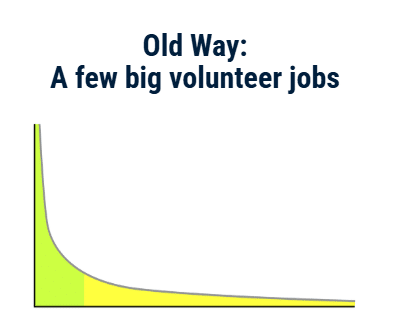
That shift from green to yellow marks the end of the old formal organizations. The people on the big side of the line are on the committee. But most people are outside the formal organization, down on the long tail, just interested in the idea, with low motivation. They don’t contribute enough to be worth including in the old way committee hierarchy.
We’ve been looking for volunteers by focusing on the tasks that require the most motivation. “We need someone to serve a three-year term on the beautification committee,” or “We need you to give up your entire Saturday for hard physical labor on cleanup day, or it doesn’t count.”
Let’s flip this model over.
Give less-motivated people small but meaningful ways to participate, and then we can look for volunteers with even the tiniest levels of motivation. Make the size of the step you ask them to take match the level of their motivation. Maybe they’ll get motivated to do more later, but start tiny. It doesn’t matter who is on the committee, and all the small contributions count.
Professor B.J. Fogg’s Behavior Model states that people can contribute only if the size of the step you ask them to take matches their level of motivation. It doesn’t matter who is on the committee, and all the small contributions count.

That’s the essence of Take Small Steps. And there are no steps too small.
We don’t meet if we don’t eat.
In small towns, fellowship often requires food. It’s the connecting force, that relatable thing we all share. In this book club, Rebecca offered to provide food. However, they decided to make their own food. Each session, someone brought food to share. Not huge meals, but different kinds of things to eat. No one was assigned to do that. People just said, “I’ll bring some food next time.” This builds fellowship into the gathering. Fellowship is what happens when small groups or communities share common interests, faith, or goals and build camaraderie together.
Teach one, reach one
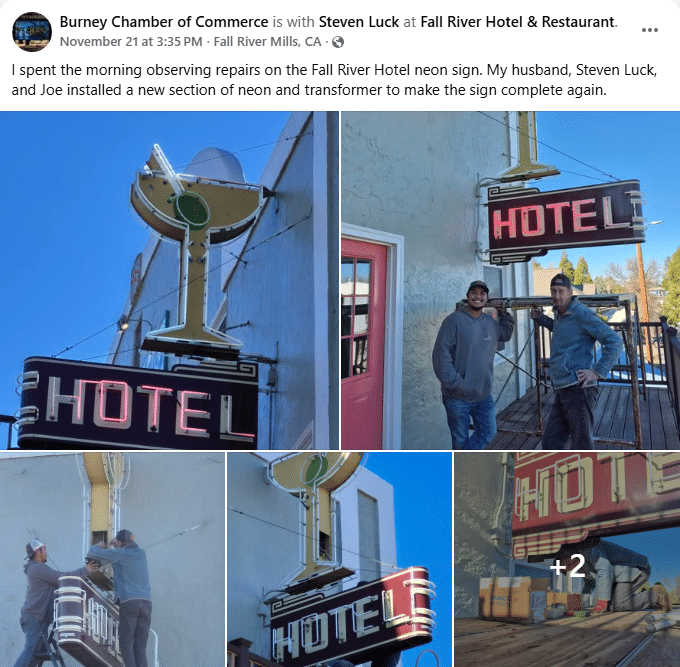
One of the board members had built the neon sign at the hotel in town a long time ago. It needed rehabbing. Instead of just doing it, he is teaching Jen’s husband how to rehab a neon sign. They are also working with a guy in Reno who sells the neon needed. Their next step is to bring on some younger people to learn the skill.
Community Clean Up Project
Burney had an empty lot that was being used as a dump site. One idea was to clean up that lot. They didn’t ask for permission; they just told the owner they were doing it. Word got out that folks were cleaning up the lot, and anyone could come and help.
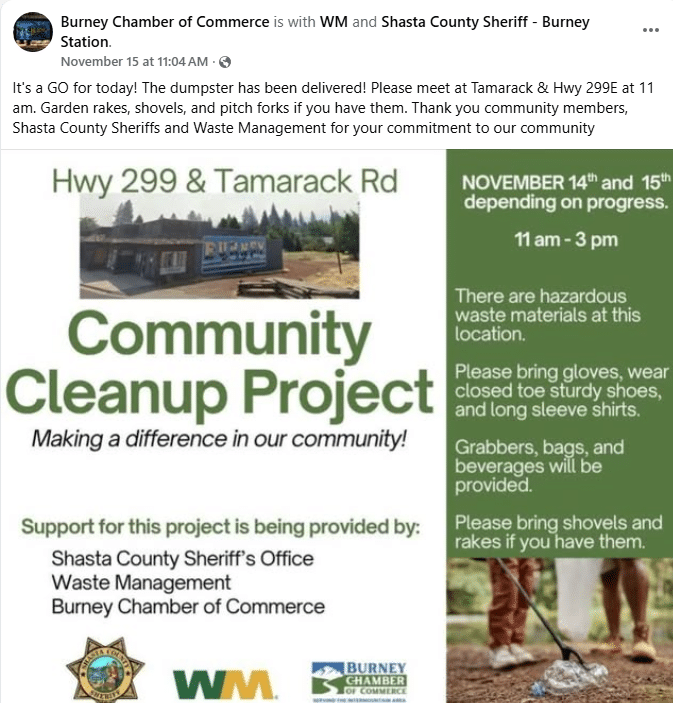
They did ask Waste Management for a dumpster, and it was donated. The crew filled it up on the first day! So Waste Management donated another one.
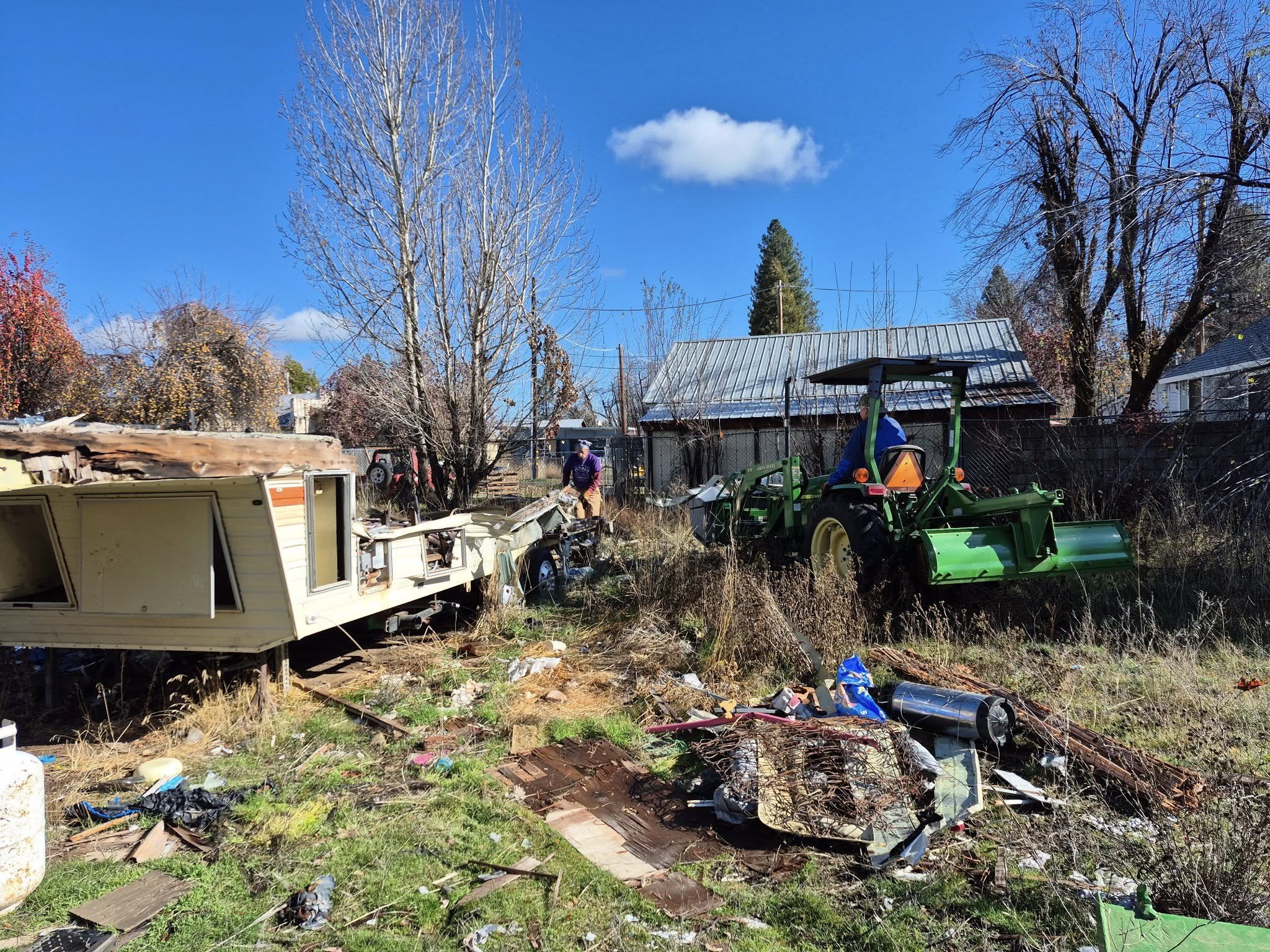
In pretty short order, that empty lot was cleaned up. Folks had fun working together, too.
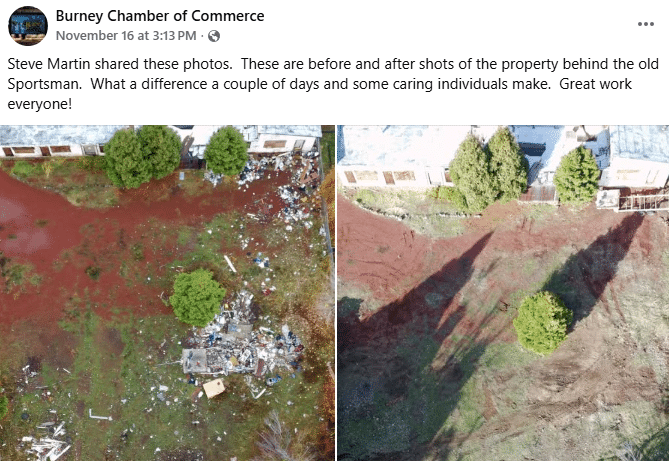
Let’s hear it for the volunteers who came and cleaned the lot up, and for the sponsors, too. This was a group of people with an idea that took action, invited everyone to help, and made a real difference in their community.
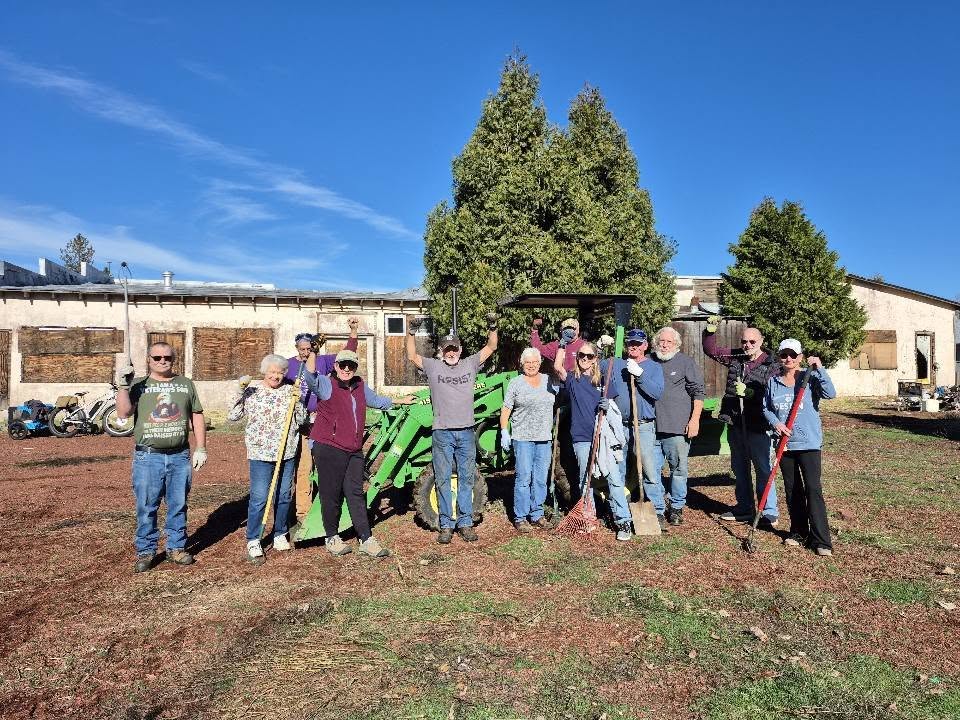
Beautify Burney Strikes Again!
Beautify Burney decided to clean up the Rite Aid parking lot. Folks saw that working together to clean up built local pride. It was easy enough that most people could participate, and Burney was happy.
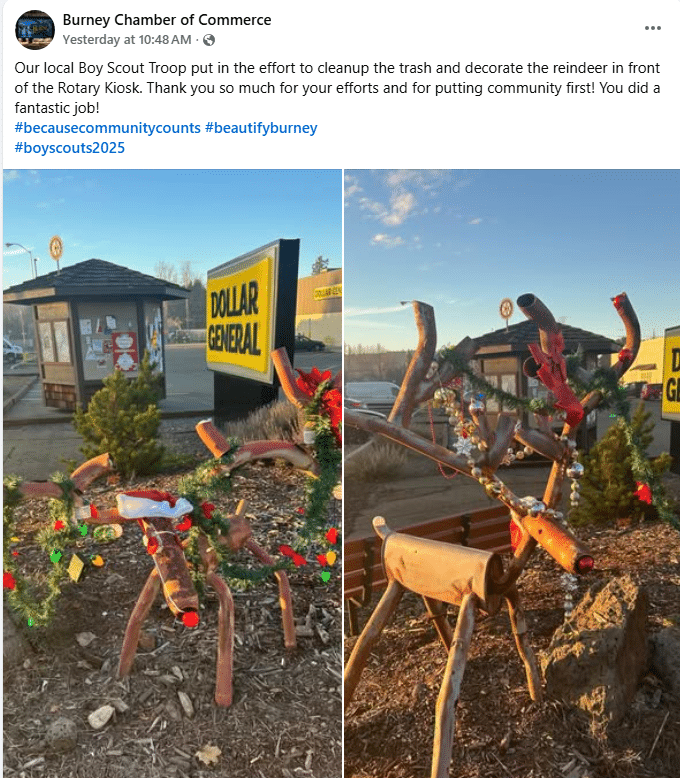
Things like reindeer started appearing at places like the Rotary Kiosk.
Folks want to see action first, and then many will think, “I can do that.” And they will.
How can we help versus “You Should …”
Small businesses are often understaffed and under-supported, and they need help but won’t ask.
They don’t need to be told what they need to do. They know.
There’s a group from the Burney Book Club that has decided to just go and visit with the small businesses and ask how they can help. The Pizza Place has torn bunting hanging from the awning. This group is going to repair those buntings. It’s not a big deal; they have the time and the people to help, and the business owner appreciates it.
This could have been ugly. The old way would’ve been to say, “You need to fix your buntings!” It might even have been said publicly, shaming the owner. This new way is to offer to fix the bunting for them, consider it an honor to help a local business, and eat some pizza too.
Plalking, Anyone can do it
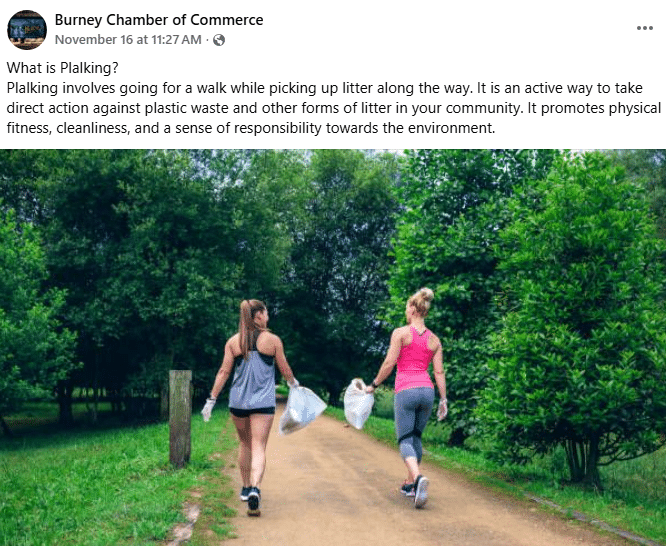
The Chamber saw this article about plalking and has shared the idea with the Burney Book Club too. Grab a small bag and while out walking, pick up some litter. Easy peasy. While you are at it, why not take a few pictures and share them online? Great way to showcase your town’s beauty and give others the idea to plalk.
Start Your Own Book Club
Everything Burney did, your town can do too, in your own way. It’s simple. Order five books (and only pay the price for four) and ask four other people to join you. Send me an email at deb@saveyour.town with your name and shipping address. I’ll send you an invoice with the cost, tax, and shipping. As soon as you’ve paid the invoice, your books will be ordered and shipped direct to you!
There is a book discussion guide at the end of the book. There’s also a gift that gives you free access to the Idea Friendly Toolkit! That’s usually $100.
My thanks to Burney, the Chamber, and Rebecca for the pictures, the stories, the excitement, and the invitation to join them in a session.
P.S. Want help with your own book club and to bring me to town? Let’s have a conversation about what’s possible! deb@saveyour.town